Questions Homeowners Ask About Painting Shutters in Carlsbad
Shutters are the part of a house that people notice only when they go wrong. A louver that has curled, a hinge pin that has bled rust down a wall, a pair of panels that have faded to two different colours: any of these makes a freshly painted house look unfinished. In Carlsbad the shutters sit in a hard environment, with strong sun for most of the year, marine fog that settles on them overnight, and salt that drifts in from the beach and the lagoons. The questions below are the ones that come up most often when shutters are the job.
What are the shutters actually made of?
This decides everything else, so it comes first. Older homes in Olde Carlsbad and The Barrio, many of them 1950s cottages and bungalows, often carry real wood shutters that were hung when the house was built. Houses from the 1960s and 1970s tend to have a mix of wood and early vinyl. Newer homes in Aviara, La Costa and Bressi Ranch usually have vinyl, composite or foam core shutters that came with the original build.
A quick test sorts them out. Knock on the shutter: wood has a dull, solid sound, vinyl has a hollow tap, and composite sits somewhere between. Look at the back as well. A moulded plastic back with a visible seam is vinyl or composite. A back with saw marks and grain is wood. Press a thumbnail into the lower edge of a wooden louver, and if it dents, the wood has started to rot.
Do shutters come off the wall for painting?
Whenever they can, yes. A shutter painted in place leaves the edges and the back unsealed, and it gets paint on the wall, the window trim and the hinge hardware. Taken down and laid flat on sawhorses, a shutter can be sanded, primed and coated on both faces and all four edges. That matters more than it sounds, because water enters a wooden shutter through the unpainted back and the end grain at the bottom of each louver.
Some shutters are screwed into masonry or stucco with fasteners that have rusted solid. If a screw head strips or snaps, the shutter stays up and gets painted in place with careful masking. That is a compromise, and the notes on the job should say so.
How does the old finish get ready for new paint?
The steps are the same on most materials, with small differences in the middle.
- Wash off dirt, spider webbing and chalk with a stiff brush and plain water, then let the shutters dry completely.
- Scrape any loose or blistered paint back to a firm edge, and feather the edges with sandpaper so they do not show through the new coats.
- Scuff sand the whole surface so the primer has something to hold onto. On vinyl, keep this light.
- Fill cracks, splits and old screw holes on wood with an exterior filler, and sand it flush once it has cured.
- Wipe off the dust with a damp cloth before any primer goes on.
Louvered shutters are the slow part. Each slat has a top, a bottom and an angled face, and dirt collects where the slat meets the frame. A small brush and a lot of patience clears it, and rushing this is the main reason that louvers peel first.
Which paint works on wood, vinyl and composite?
Wood takes a primer first, usually an oil based or bonding primer on bare grain and on any spot where the old paint has failed. A topcoat of exterior acrylic or an enamel follows, in two coats. Satin and semi gloss both work, and the gloss helps because it sheds water from the louver faces.
Vinyl is more particular. Dark colours absorb heat, and vinyl can warp when it gets hot, so a shutter on a west facing wall in Carlsbad should be painted a colour no darker than the maker allows for that material. Most paint manufacturers publish a heat reflective rating for exactly this reason, and a light reflectance value on the chip tells you how a colour behaves in the sun. Composite and foam core shutters are less touchy but still benefit from the same care.
Whatever the material, stir the paint well and keep coats thin. A thick coat in a louver fills the gap between slats and then cracks along it.
Brush, roller or sprayer for louvers?
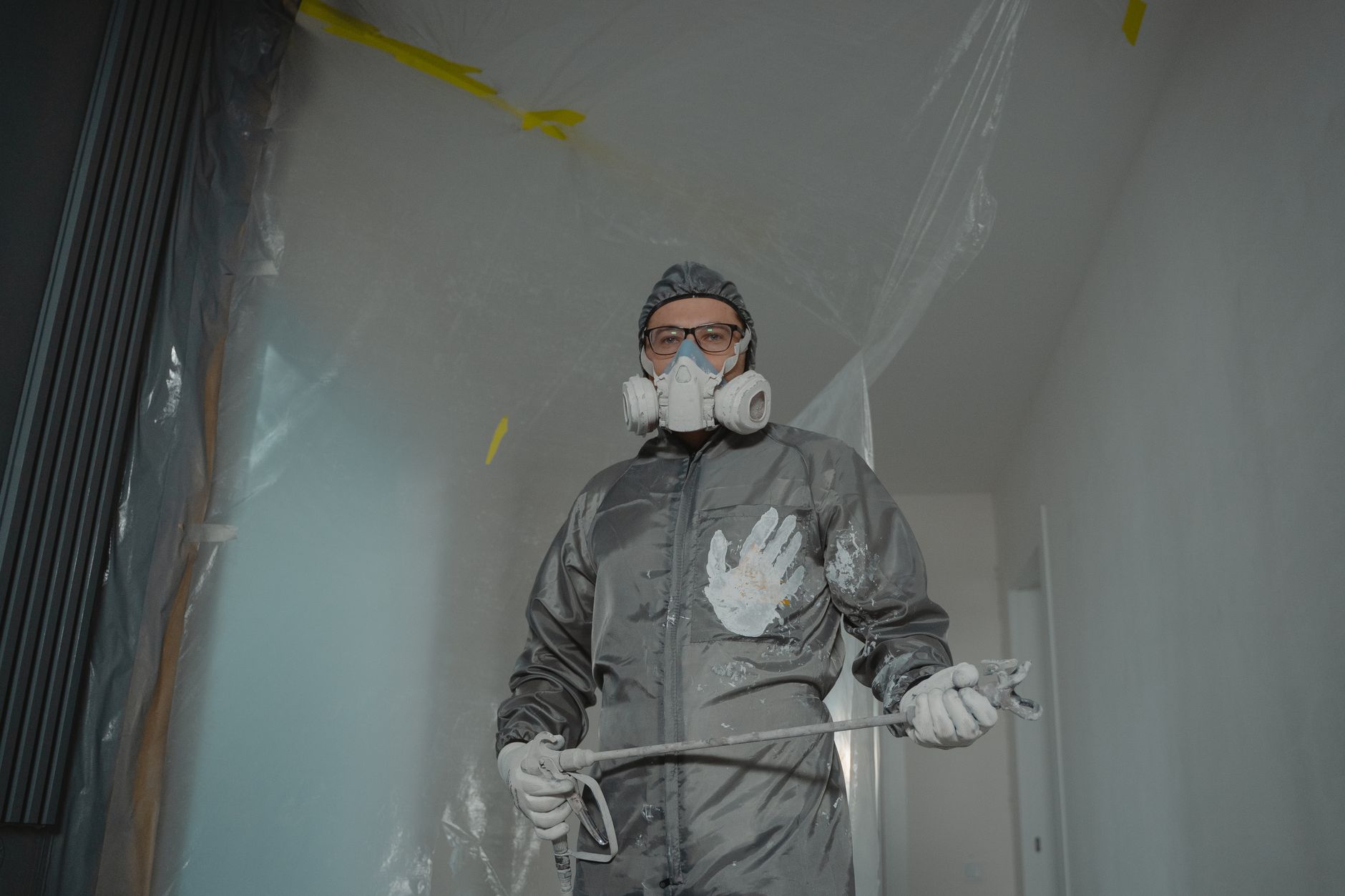
A sprayer gets paint into the slats faster than anything else, and on a set of six or eight pairs it saves a large part of the day. It needs a place to work, a still morning, and enough masking that nothing on the ground or the wall picks up overspray. A brush is better for the edges and for touching up runs. A small roller with a short nap handles the flat frame sections on either side of the louvers.
The order matters. Spray or brush the louvers first, then do the rails and stiles, and finish the outer edges last, because those are the surfaces that get handled when the shutter goes back on the wall.
What about the hinges, pintles and hold backs?
Iron shutter hardware on a house near Carlsbad State Beach or Agua Hedionda Lagoon rusts faster than anything else on the facade. The rust runs down the wall below each pintle and leaves a brown streak that no amount of washing removes. Take the hardware off, wire brush it, treat any pitting with a rust converter, prime it with a rust inhibiting primer and finish with an enamel. If the pin is too far gone, replace it. Painting over a thin, flaking pin only hides the problem for a season.
Check the screw holes in the wall as well. Old holes in stucco or wood that have gone soft will not hold the same fastener twice, so they get filled or moved a little. Use stainless or coated screws on the way back, since plain steel will start to rust again within a few seasons on this stretch of the coast.
Should the shutters match the front door?
There is no rule for this, but there are a few habits that tend to look right. A shutter colour that picks up the front door but sits a step darker or lighter reads as deliberate. A colour that is exactly the same as the door tends to flatten the facade. The trim and the shutters are often painted as a pair, with the door as the accent. On a 1960s ranch house with a low roofline and a wide garage door, a restrained shutter colour keeps the eye from jumping between three competing colours across the front.
Sample on the surface itself, not on a card. A colour that looks right inside the shop can shift in the strong Carlsbad light. Look at a painted sample in the morning, at midday and in the late afternoon before settling on it.
How long should the new paint last?
That depends on the exposure more than on the paint. Shutters on a north facing wall under an eave can go many years between repaints. Shutters on a west wall with no shade, near the coast, fade and chalk sooner. A well prepared set of wood shutters with two coats over a good primer will hold its colour and its seal for a long time, but the bottom edges should be checked every year or two. Once the paint on a lower louver starts to lift, a quick scrape, spot prime and one coat of topcoat stops it from reaching the wood.
Chalking, which shows up as a fine powder on a dark shutter when a hand is run across it, is the sign that the sun has worn the surface of the binder. It is normal and not a failure, but it means the next coat should go on within a season or two.
What goes wrong most often?
The same few things show up on job after job. Paint applied over a damp surface after morning fog blisters within days. Paint applied in direct afternoon sun skins over before it levels and leaves lap marks. Shutters painted while still hung have bare edges that take water. Hardware painted without removing rust bleeds through the new coat. And dark colours chosen for vinyl without checking the heat limit lead to warping.
Almost all of it comes down to timing and prep, which are cheap, and not to the paint itself.
Shutters repay the small amount of extra time they ask for, since most of the work is in taking them down, cleaning them and sealing every edge. Do that, and a set of shutters in Carlsbad holds up to the sun and the fog far better than the same shutters painted quickly in place.